Quick Composting of Fruit and Vegetable Market Waste with Microbial Decomposer
Every day, traditional markets in Indonesia produce tons of rotting fruit and vegetable waste. These piles not only cause pungent odors but also become a source of pollution if not managed properly. However, with microbial decomposer technology, composting fruit and vegetable market waste can be done in a short time, reducing waste volume and producing valuable organic fertilizer. This article will thoroughly discuss how to efficiently manage market waste using Biosolution's organic waste decomposer formula.
Why Fruit and Vegetable Market Waste Needs Special Management?
Fruit and vegetable market waste has unique characteristics: high moisture content (80-90%), easily decomposes, and contains various pathogens if left untreated. Without proper handling, these waste piles become breeding grounds for flies, sources of ammonia odor, and produce leachate that contaminates soil and water. On the other hand, their rich nutrient content (carbon, nitrogen, potassium) has great potential for making quality compost.
Unfortunately, conventional methods like open composting take 2-3 months and require regular turning. For markets with daily waste volumes of 1-5 tons, this method is impractical. This is where the role of microbial decomposers becomes crucial: accelerating the decomposition process from months to weeks, while suppressing odors and pathogens.
Mechanism of Microbial Decomposer in Accelerating Composting
The Organic Waste Decomposer Formula from Biosolution contains a consortium of superior microbes: Streptomyces sp., Bacillus spp., and Aspergillus spp. These three microbes work synergistically to break down cellulose, hemicellulose, lignin, and complex proteins in fruit and vegetable waste.
- Streptomyces sp.: Produces cellulase and chitinase enzymes, as well as natural antibiotics that suppress the growth of pathogenic fungi and spoilage bacteria. This is important to prevent foul odors and maintain compost quality.
- Bacillus spp.: Thermophilic bacteria active at 40-60°C, accelerating decomposition by producing protease, amylase, and lipase. They also help rapidly lower the C/N ratio.
- Aspergillus spp.: Fungi that degrade lignin and hard cellulose, making the compost structure crumbly and rich in humus.
This combination allows the composting process to complete in 14-21 days, depending on pile conditions. Ammonia odor is significantly reduced because nitrogen is bound by microbes into biomass, not released into the air.
Practical Steps for Composting Market Waste with Decomposer
Here is a field application guide that has been tested in various traditional markets:
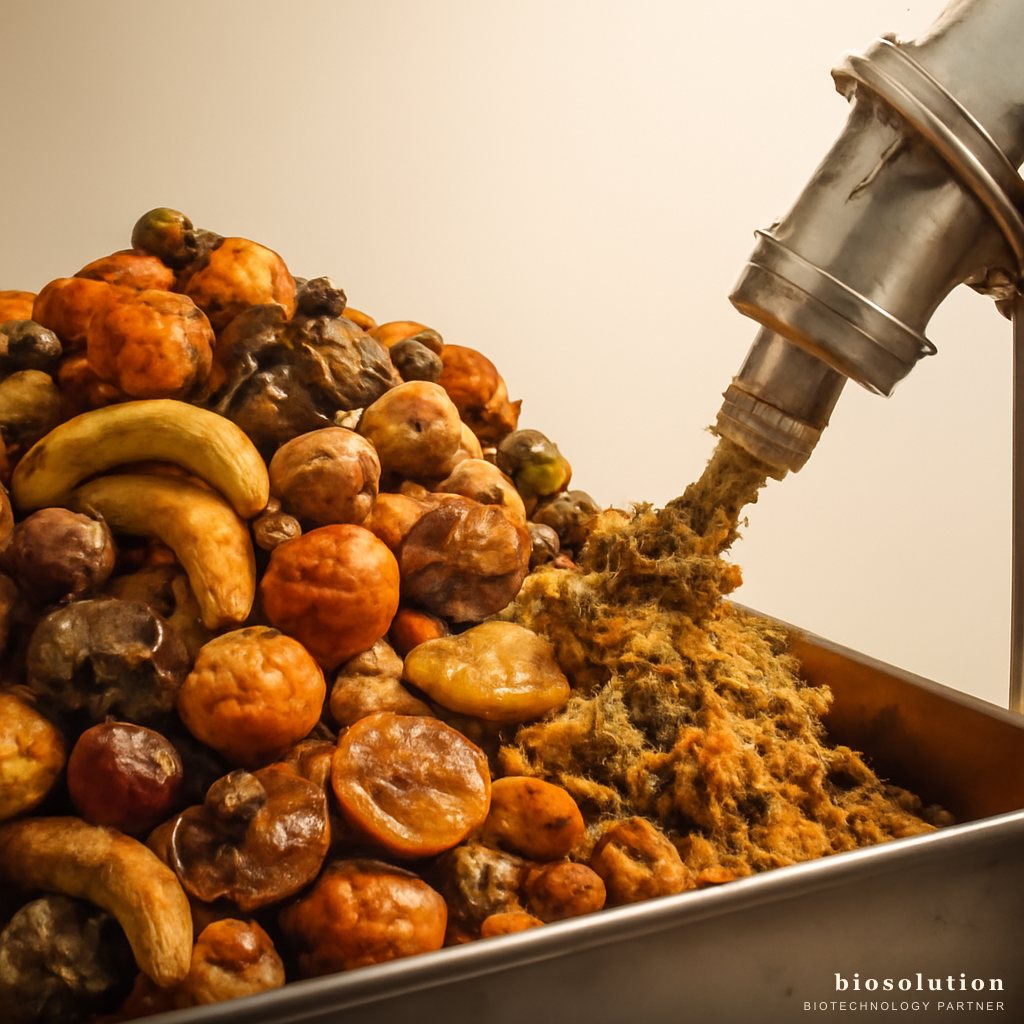
- Sorting and shredding: Separate waste from non-organic trash (plastic, metal). Shred materials to 5-10 cm size to increase microbial contact surface.
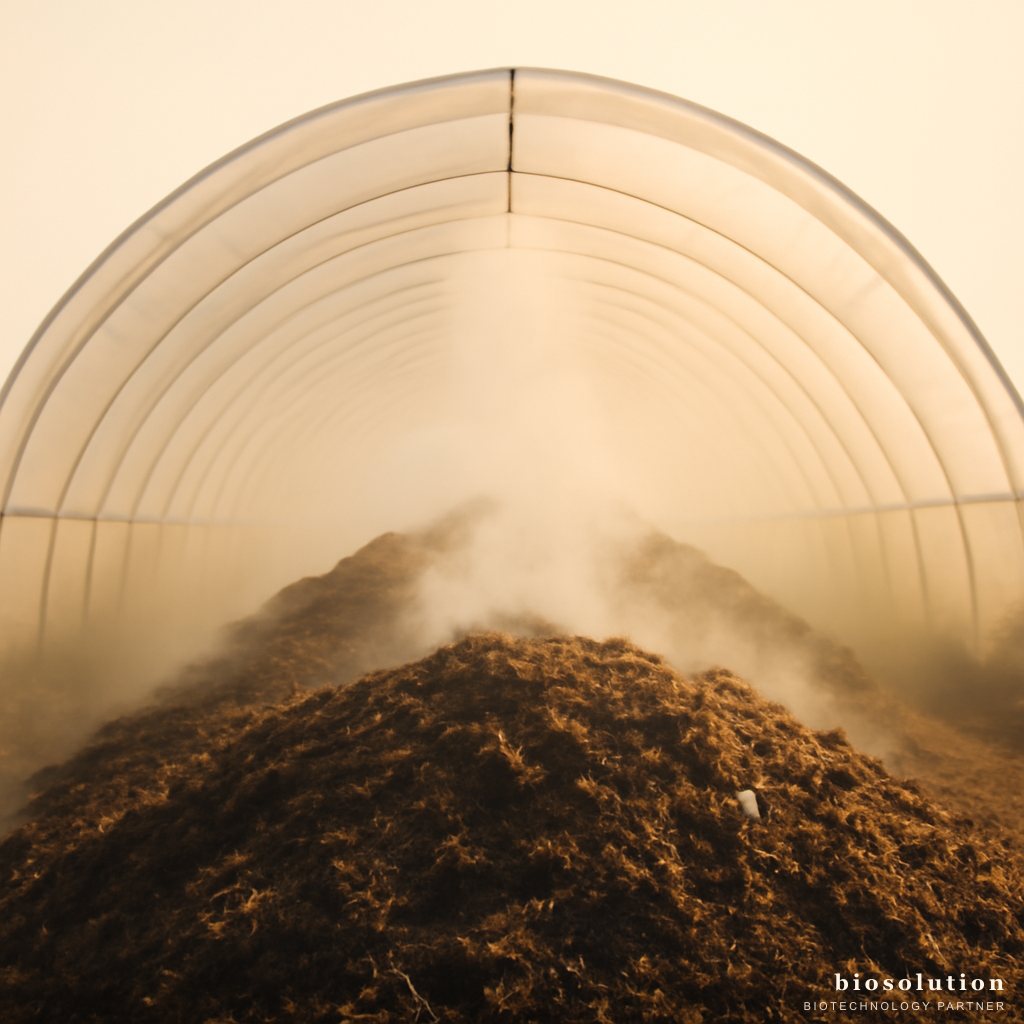
- Pile arrangement: Create piles 1-1.5 m high and 2 m wide. Do not pack too tightly to ensure good aeration.
- Decomposer application: Dilute 1 liter of Organic Waste Decomposer Formula in 10 liters of water (well water or leachate water). Sprinkle evenly over each layer of the pile at a dose of 1 L formula per m³ of waste. Do this in the afternoon to avoid UV rays that can kill microbes.
- Covering: Cover the pile with a tarp or dry leaves to maintain moisture and temperature. Ideal temperature is 40-60°C.
- Turning (optional): For faster results, turn the pile every 3-5 days. However, with this consortium, turning is not mandatory.
- Harvesting: After 14-21 days, the compost is mature: dark brown to blackish, earthy smell, and temperature drops. Sift if necessary.
Result: waste volume reduced by 30-50%, compost ready for horticultural plants or sold as organic fertilizer.
Integration with Existing WWTP Systems in Markets
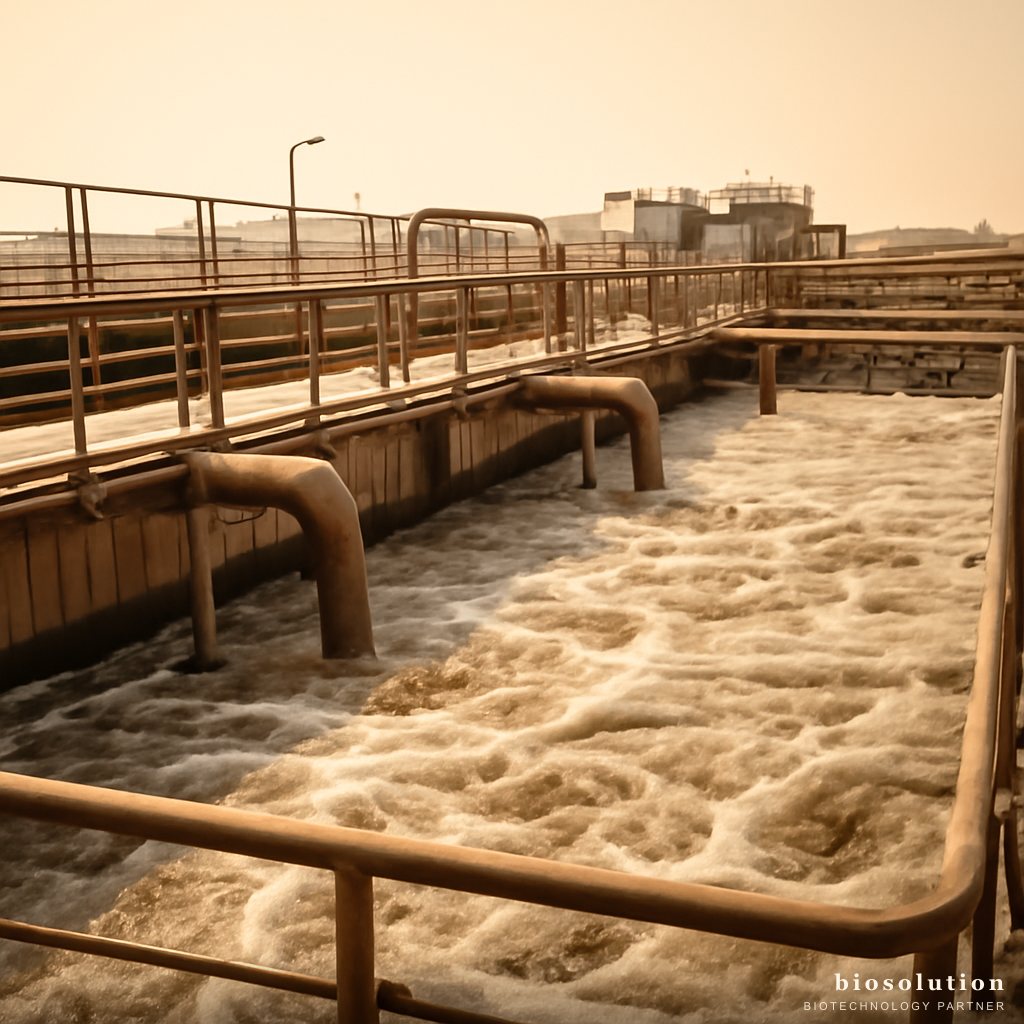
One advantage of this approach is its ability to integrate with existing wastewater treatment plants (WWTP) in markets. Leachate from compost piles typically has high BOD and COD. By adding the Bacillus and Streptomyces consortium to the leachate collection tank, bioremediation occurs simultaneously:
- Microbes break down dissolved organic compounds in leachate, reducing BOD by up to 70% in 7 days.
- Ammonia and H2S odors are drastically reduced as microbes oxidize these compounds.
- Effluent from the WWTP can be reused to water the compost pile (closed loop), saving water.
Thus, market managers do not need to build new WWTPs; they can optimize existing systems with the right decomposer dosage. This aligns with circular economy and environmentally friendly principles.
Economic and Environmental Benefits for Market Managers
Implementing this technology provides multiple benefits:
- Reduced waste transport costs: Volume reduced by 30-50% means fewer trips to the landfill, saving transportation costs.
- Saleable product: Market organic compost can be sold to farmers or urban farming communities at IDR 2,000-5,000 per kg, depending on quality.
- Regulatory compliance: Minister of Environment Regulation No. 75/2019 requires market managers to have a waste management system. In-situ composting is a recognized solution.
- Clean market image: Reduced odors, healthier environment, increasing comfort for traders and visitors.
For a market with 2 tons/day waste volume, initial investment for decomposer is around IDR 500,000 per month (60 L formula needed), including sorting labor costs. Compare this with transport costs to landfill which can reach IDR 2-5 million per month.
Case Study: Gedebage Main Market, Bandung
Gedebage Main Market, Bandung, produces 3 tons of fruit and vegetable waste per day. Since 2022, they have implemented a composting system with Biosolution decomposer. Results:
- Composting time reduced from 60 days to 18 days.
- Waste volume reduced by 45%.
- Odor not detectable from 50 meters away.
- The compost produced (1.5 tons/day) is sold to vegetable farmers in Lembang at IDR 3,000/kg, generating additional income of IDR 4.5 million/day.
This success proves that market waste is not a problem, but a resource that can be optimized.
Conclusion
Managing compost from fruit and vegetable market waste quickly and efficiently is no longer a dream. With microbial decomposer from Organic Waste Decomposer Formula, you can turn trash piles into quality compost in 14-21 days, reduce volume by up to 50%, and suppress odors. Coupled with its ability to integrate with existing WWTPs, this solution is the right choice for traditional market managers who want to apply circular economy principles and meet environmental regulations.
Interested in implementing it in your market? Consult your needs with our team via WhatsApp to get dosage and guidance tailored to field conditions. Or see our complete products at Biosolution Waste Division.
FAQ
What is a decomposer and how does it work?
A decomposer is a consortium of microbes (bacteria and fungi) that break down complex organic materials into simple compounds. In the context of fruit and vegetable waste, microbes like Bacillus and Streptomyces produce enzymes that degrade cellulose, proteins, and fats, so the composting process proceeds quickly without odor.
How long does it take to produce compost?
With Biosolution's Organic Waste Decomposer Formula, compost matures in 14-21 days, depending on particle size and moisture. If materials are finely shredded and temperature is maintained at 40-60°C, time can be shorter.
Is this product safe for the environment?
Very safe. The microbes used are natural, non-pathogenic strains that have been tested. This product contains no synthetic chemicals, so it does not contaminate soil or water. In fact, it helps reduce pollution from organic waste.
Can it be used for market waste mixed with plastic?
It is best to separate them first. Plastic cannot be degraded by microbes and will contaminate the compost. Initial sorting is highly recommended for optimal results.
How can I get this product?
You can purchase directly through the Biosolution website or contact the sales team. For bulk purchases (20 L drums or more), special discounts are available. Please consult via WhatsApp for more information.