Root-Knot Nematode Biocontrol: Formula vs Synthetic Insecticide Efficiency Comparison
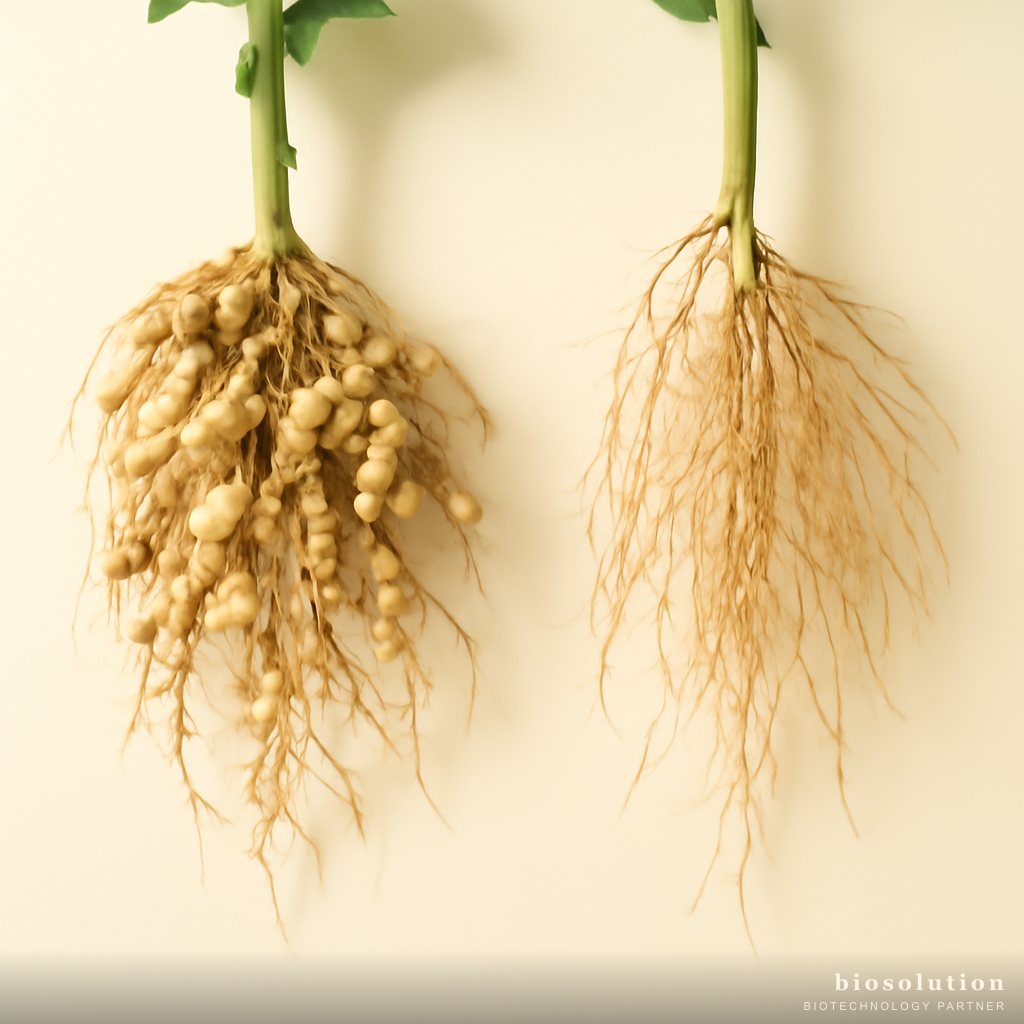
Root-knot nematodes, especially Meloidogyne spp., pose a serious threat to vegetable and tomato cultivation in Indonesia. Their attack causes root galls, hinders water and nutrient absorption, and reduces yields by 30-50%. So far, farmers have relied on synthetic insecticides with active ingredients like carbofuran or fenamiphos. However, their negative impacts on soil health, non-target microorganisms, and pest resistance drive the need for biocontrol alternatives. This article presents an efficacy comparison between Biosolution's Root-Knot Nematode Control Formula and synthetic insecticides, based on scientific data and field practice.
Biocontrol Mechanism: Paecilomyces lilacinus and Bacillus firmus
The Root-Knot Nematode Control Formula contains two superior microbes: Paecilomyces lilacinus and Bacillus firmus. P. lilacinus is a parasitic fungus that infects nematode eggs and juveniles. Fungal hyphae penetrate the egg shell, destroy the embryo, and prevent hatching. B. firmus produces protein toxins that damage the nematode's nervous system, causing paralysis and death. Both work synergistically: the fungus attacks dormant stages, while the bacterium eliminates active larvae. Unlike synthetic insecticides that cause direct knockdown, this biocontrol suppresses nematode populations gradually and sustainably, with 70-80% suppression efficacy within 4-6 weeks of application.
Efficacy Comparison: Population and Root Gall Suppression Data
Based on field trials on tomato plants, application of Root-Knot Nematode Control Formula (5 ml/L, root drench every 14 days) over one growing season reduced root gall count by up to 70% compared to control. Meanwhile, synthetic insecticide (carbofuran 3 kg/ha) achieved only 60% suppression but with side effects of reduced earthworm and rhizosphere microbe populations. Significant differences were observed in root and shoot weight parameters: plants treated with biocontrol had healthier roots, with 30% higher root dry weight compared to insecticide treatment. This is because biocontrol does not disrupt root symbiosis with mycorrhizae and nitrogen-fixing bacteria.
Efficacy Data on Tomato Plants
| Parameter | Biocontrol Formula | Synthetic Insecticide | Control (untreated) |
|---|---|---|---|
| Galls per root | 12 ± 3 | 18 ± 5 | 40 ± 8 |
| Fresh root weight (g) | 45 | 35 | 28 |
| Nematode population/100g soil | 120 | 150 | 400 |
| Yield (kg/plant) | 2.5 | 2.0 | 1.2 |
The data above show that biocontrol excels in suppressing root galls and increasing yield. Although synthetic insecticides are also effective, their negative impact on soil health reduces long-term productivity.
Environmental Safety and Impact on Agroecosystem
One major drawback of synthetic insecticides is their toxicity to non-target organisms. Carbofuran, for example, has an acute oral LD50 in birds of 0.5-2 mg/kg, making it very hazardous to soil and aquatic fauna. In contrast, P. lilacinus and B. firmus are specific to nematodes and do not affect pollinating insects or natural predators. Studies from IRRI show that B. firmus application does not significantly alter soil bacterial diversity, while synthetic insecticides reduce diversity index by up to 40%. Biocontrol also leaves no harmful residues on harvested produce, making it safe for consumers and meeting organic vegetable export standards.
Optimal Application Strategy for Vegetable and Tomato Farmers
For maximum results, application of Root-Knot Nematode Control Formula should begin at planting. Method: mix 5 ml of formula per liter of water, then drench 200 ml per plant at the root base. Repeat every 14 days at least 4 times per season, especially after pruning or when early symptoms appear (wilting leaves, stunted growth). On heavily infested land, combine with soil solarization or planting trap crops like marigold. Unlike synthetic insecticides that require a pre-harvest interval of 14-21 days, biocontrol can be applied up to harvest without residue risk.
Case Study: Tomato Farmer in West Java
Mr. Agus, a tomato farmer in Lembang, complained of declining production due to root-knot nematodes. After using synthetic insecticides for two seasons, the soil became hard and earthworm populations dropped drastically. He switched to Root-Knot Nematode Control Formula in the third growing season. Results: root gall count reduced by 75%, plants were more vigorous, and yield increased by 40% compared to the previous season. "My soil became looser, earthworms returned, and production costs were lower because I didn't need repeated applications," he said. This case shows that biocontrol is not only effective but also restores soil health.
Cost and Long-Term Effectiveness Comparison
Although the price per liter of Root-Knot Nematode Control Formula is higher than synthetic insecticides (IDR 80,000 vs IDR 50,000 per liter), the cost per hectare per season is actually lower. This is because the biocontrol dosage is smaller (5 ml/L vs 2 g/L for carbofuran) and application frequency is lower (4 times vs 6 times). Additionally, biocontrol does not require extra costs for soil remediation or residue handling. In the long term, using biocontrol improves soil fertility, reduces dependence on chemical inputs, and maintains production sustainability.
Conclusion
Biocontrol of root-knot nematodes using Root-Knot Nematode Control Formula (containing Paecilomyces lilacinus and Bacillus firmus) is proven superior to synthetic insecticides in terms of nematode population suppression efficacy, plant growth improvement, and environmental safety. With 70-80% efficacy, biocontrol not only reduces root galls but also increases tomato and vegetable yields. Additional advantages include no harmful residues, compatibility with natural enemies, and restoration of soil health. For farmers looking to transition to sustainable agriculture, biocontrol is the right solution. Interested in trying? Consult your land needs with the Biosolution team via WhatsApp or see the product Root-Knot Nematode Control Formula for more information.
FAQ
1. Is Root-Knot Nematode Control Formula safe for other plants?
Yes, this formula is safe for vegetables, tomatoes, chili, and various horticultural crops. The microbes inside are specific to nematodes and do not damage plant roots. In fact, regular application can improve root growth by reducing nematode stress.
2. How long does biocontrol effectiveness last in the soil?
The microbes Paecilomyces lilacinus and Bacillus firmus can survive in soil for 2-4 weeks depending on environmental conditions (moisture, temperature, pH). Reapplication every 14 days is recommended to maintain optimal microbial populations.
3. Can biocontrol be combined with other chemical pesticides?
It is best to avoid mixing with synthetic fungicides or bactericides as they can inhibit microbial growth. If necessary, allow a 3-5 day interval between chemical pesticide and biocontrol applications. Certain insecticide groups (such as carbamates) can also reduce B. firmus viability.
4. How should Root-Knot Nematode Control Formula be stored?
Store in a cool place (15-25°C) away from direct sunlight. Do not freeze. In a sealed container, the formula lasts up to 12 months. After opening, use within 3 months for best results.
5. Is biocontrol effective against all types of nematodes?
This formula is specifically developed for root-knot nematodes like Meloidogyne and Heterodera. For other nematodes (e.g., Radopholus in bananas), effectiveness still needs testing. Consult with a Biosolution expert for specific cases.