Root-Knot Nematode Biocontrol: Integrating Nematode Control Formula with Natural Enemies
Root-parasitic nematodes, especially Meloidogyne spp., are a scourge for vegetable and tomato farmers in Indonesia. Root-knot nematode attack causes yield losses of 30-50%. Root-knot nematode biocontrol offers an environmentally friendly solution that can be integrated into Integrated Pest Management (IPM). One flagship product is the Root-Knot Nematode Control Formula from Biosolution, containing two biological agents: Paecilomyces lilacinus and Bacillus firmus. This article discusses how to integrate this product with other natural enemies for maximum effectiveness.
Why is Root-Knot Nematode Biocontrol Important in IPM?
IPM emphasizes the use of synergistic combinations of control techniques. Root-knot nematodes are difficult to control with a single method due to their complex life cycle in the soil. The use of chemical nematicides is often ineffective in the long term and damages the soil ecosystem. Root-knot nematode biocontrol utilizes natural enemies such as antagonistic fungi and bacteria that specifically attack nematodes. This approach reduces chemical residues on harvested products and maintains soil microbial balance. According to FAO, biocontrol-based IPM can increase tomato production by up to 20% compared to conventional chemical control.
Nematode Control Formula: Composition and Mechanism of Action
This product contains two superior microorganisms that work synergistically:
Paecilomyces lilacinus
This fungus is a parasite of nematode eggs. Fungal hyphae penetrate the egg shell and destroy the embryo inside. P. lilacinus also infects second-stage juveniles (J2) that actively seek roots. Thus, the next generation nematode population is disrupted.
Bacillus firmus
This gram-positive bacterium produces a nematicidal toxin. The toxin disrupts the nematode's nervous system, causing paralysis and death. B. firmus also triggers systemic resistance in plants, making them more tolerant to nematode attack.
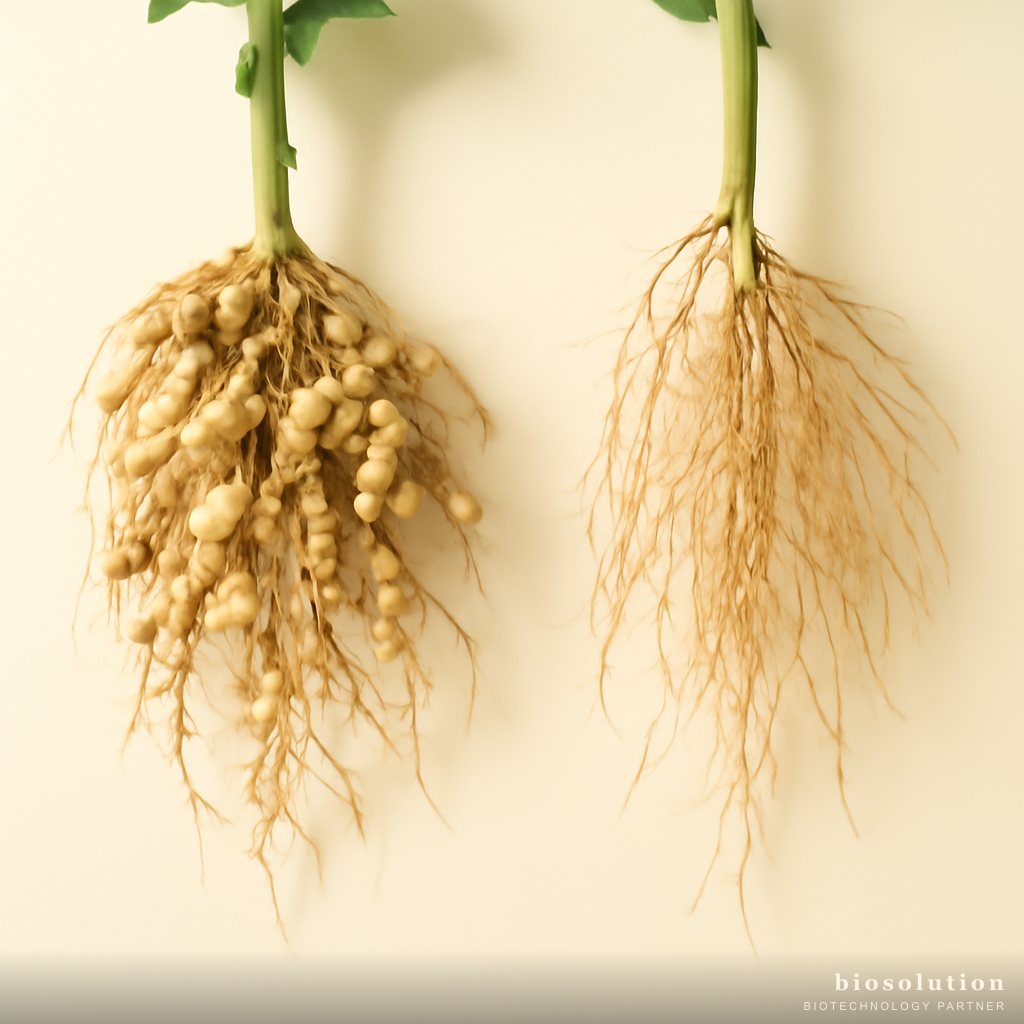
The combination provides a dual effect: suppressing nematode populations in the soil and protecting roots from new infections. Data show that routine application can suppress nematode populations by 70-80% and significantly reduce root gall formation.
Application Method: Root Drench with Precise Dosage
The Root-Knot Nematode Control Formula is applied via the root drench method. The recommended dosage is 5 ml per liter of water, applied every 14 days. A minimum of 4 applications per growing season is required for optimal results. The best times are at planting (after transplanting) and after pruning, as roots are susceptible to infection during these phases.
Application steps:
- Mix 5 ml of product into 1 liter of clean water.
- Stir until homogeneous.
- Drench the solution onto the plant root zone, ensuring it reaches the active root zone.
- Repeat every 2 weeks.
It is important to maintain soil moisture for the microorganisms to thrive. Avoid simultaneous use with broad-spectrum chemical fungicides that can inhibit the growth of biological agents.
Integration with Other Natural Enemies
For maximum results, root-knot nematode biocontrol can be integrated with other natural enemies such as:
- Plant growth-promoting rhizobacteria (PGPR): For example, Bacillus subtilis and Pseudomonas fluorescens that produce nematicidal compounds and enhance plant resistance.
- Mycorrhizal fungi: Expand nutrient uptake and physically protect roots from nematodes.
- Predatory nematodes: Such as Mononchus spp. that prey on parasitic nematodes.
Integrated application creates a soil ecosystem that is unfavorable for parasitic nematodes. For instance, applying the Nematode Control Formula together with PGPR can increase suppression effectiveness up to 90%.
Case Study: Effectiveness on Tomato Plants
In a trial on tomato fields in West Java, routine application of the Root-Knot Nematode Control Formula showed a reduction in root gall index from 4.2 (scale 0-5) to 1.8. Fruit production increased by 35% compared to the control. The presence of Paecilomyces lilacinus and Bacillus firmus was detected in the rhizosphere up to 60 days after application, indicating good persistence.
Conclusion
Root-knot nematode biocontrol with Biosolution's Nematode Control Formula is an effective strategy in integrated IPM. Integration with other natural enemies strengthens control and maintains soil health. For further consultation on dosage and application schedule, contact the Biosolution technical team via WhatsApp or see the product page Nematode Control Formula.