Tomato Fusarium Wilt Control Formula: Proper Dosage and Application Timing
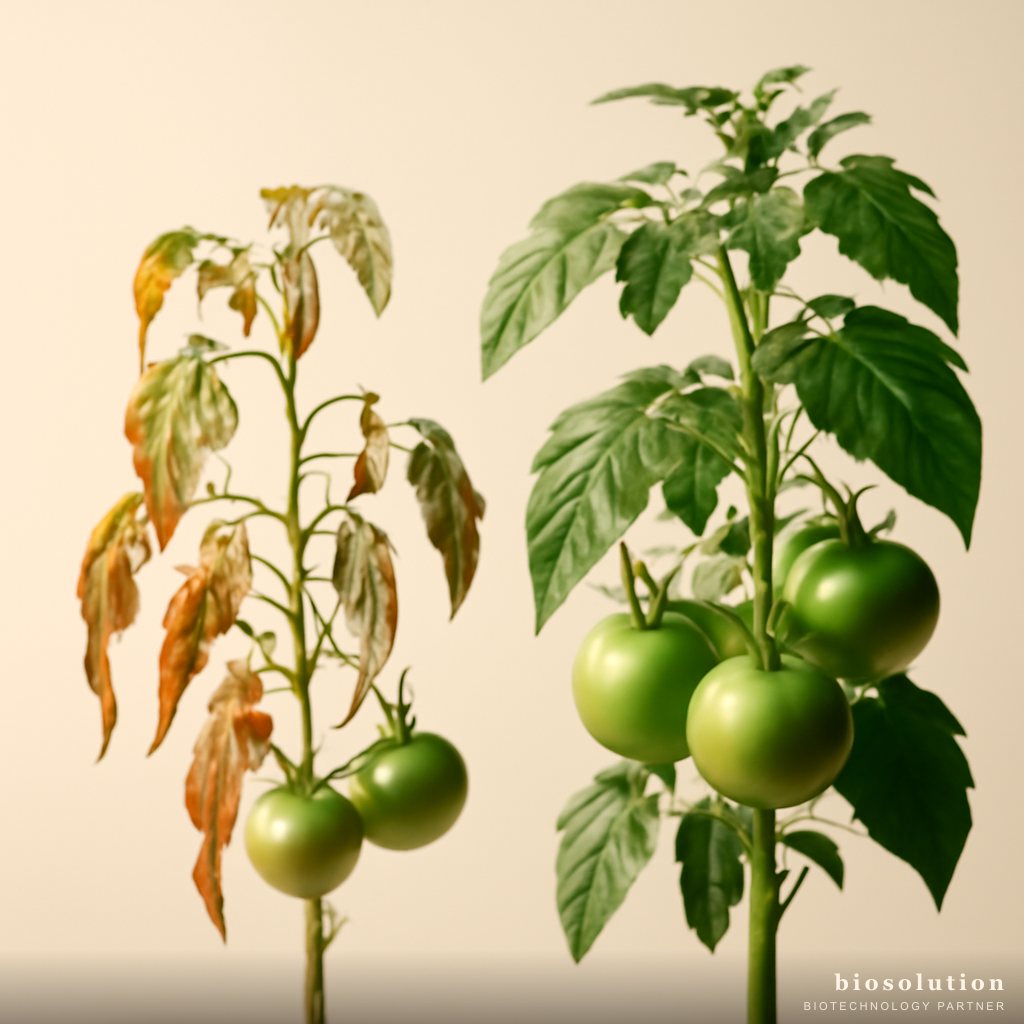
Fusarium wilt caused by the pathogenic fungus Fusarium oxysporum is one of the most damaging diseases in tomato and chili cultivation. This pathogen infection causes sudden wilting, yellowing leaves, and eventually plant death, drastically reducing fruit production. To address this issue, tomato fusarium wilt control based on biological agents is an environmentally friendly solution increasingly chosen by farmers. The Fusarium Wilt Control Formula from Biosolution, containing a combination of Trichoderma harzianum, Gliocladium virens, and Pseudomonas fluorescens, offers an effective biological approach. This article will thoroughly discuss the correct dosage, timing, and application methods for optimal control.
Why is the Fusarium Wilt Control Formula Effective?
The Fusarium Wilt Control Formula works through three complementary main mechanisms. First, Trichoderma harzianum acts as a mycoparasite, directly attacking Fusarium oxysporum hyphae by coiling and penetrating the pathogen's cell wall, then degrading it using chitinase and glucanase enzymes. Second, Gliocladium virens produces antibiotic compounds such as gliovirin that inhibit Fusarium growth and compete for space and nutrients in the rhizosphere. Third, Pseudomonas fluorescens produces siderophores that bind iron ions (Fe³⁺) around the roots, depriving the pathogen of essential iron for its metabolism. The combination of these three agents creates a strong synergy in suppressing Fusarium oxysporum populations in the soil and protecting plant roots.
Additionally, application of the Fusarium Wilt Control Formula stimulates plant growth through the production of phytohormones such as auxins and cytokinins by Pseudomonas fluorescens. Thus, tomato and chili plants become more vigorous and have better systemic resistance against pathogen attack. This formula is also safe for organic farming and leaves no harmful residues on fruit.
Dosage and Application Method of Fusarium Wilt Control Formula
To achieve maximum results, dosage and application method must be precise. Based on technical recommendations, the dosage of Fusarium Wilt Control Formula is 5 ml per liter of water. This solution is applied using the soil drench method at 200-300 ml per plant, depending on plant size. Ensure the solution reaches the root zone evenly.
Application Steps
- Solution preparation: Mix 5 ml of Fusarium Wilt Control Formula into 1 liter of clean water. Stir until homogeneous. Use water that is not high in chlorine (let well water or tap water sit for 24 hours).
- Application timing: The first application is done at planting by mixing the solution into the planting hole. Subsequent applications are repeated every 14 days during the vegetative phase (until plants begin to flower).
- Drench technique: Slowly pour the solution around the base of the stem, avoiding leaves to prevent spotting.
- Combination with adjuvant: To improve adhesion and spread, a non-ionic adjuvant such as organic sticker (e.g., 0.5 ml/L) can be added. However, ensure the adjuvant is not bactericidal or fungicidal that could kill the biological agents.
Frequency and Interval
Application every 14 days is based on the life cycle of Trichoderma and Pseudomonas, which require time for colonization and competition in the rhizosphere. Too infrequent application (>14 days) can cause the biological agent population to decline, while too frequent application (<7 days) is inefficient and risks soil saturation. During the rainy season or in fields with a history of severe attack, frequency can be increased to every 10 days.
Best Application Timing for Optimal Control
Application timing greatly determines the effectiveness of the Fusarium Wilt Control Formula. Based on research data, preventive application (before infection) is more effective than curative application (after plants are sick). Here is a guide for application timing:
- At planting (preventive): Mix the solution into the planting hole or soak seedlings in the formula solution (5 ml/L) for 15-30 minutes before planting. This protects young roots from Fusarium attack present in the soil.
- Early vegetative phase (10-30 DAT): Soil drench at 14 and 28 days after transplanting (DAT) to strengthen colonization of biological agents in the rhizosphere.
- Late vegetative phase (30-45 DAT): Additional application if needed, especially if early wilting symptoms appear. However, if plants are severely infected (permanent wilting), this formula is more about inhibiting spread to nearby healthy plants.
Environmental Factors Affecting
High soil moisture (60-80%) and temperatures of 25-30°C support the activity of Trichoderma and Pseudomonas. Avoid application during waterlogged soil or extreme drought. The best times are morning (06:00-09:00) or afternoon (15:00-17:00) to avoid UV rays that can damage microbial cells.
Combination with Other Cultivation Practices
The Fusarium Wilt Control Formula will work optimally when combined with good cultivation practices, including:
- Crop rotation: Avoid planting tomatoes or chili in the same field consecutively. Rotation with non-solanaceous crops (e.g., rice, corn, legumes) for 2-3 seasons can reduce Fusarium populations in the soil.
- Use of silver-black plastic mulch: Mulch reduces soil water splashing that carries Fusarium spores to plants, and maintains soil moisture.
- Field sanitation: Remove diseased plant residues and weeds that can serve as alternative hosts.
- Balanced fertilization: Avoid excessive nitrogen fertilization that makes plants succulent and susceptible. Use organic fertilizers rich in organic matter to support biological agent populations.
Integration with Other Biological Agents
The Fusarium Wilt Control Formula can be combined with other compatible biofungicides, such as Bacillus subtilis or Streptomyces sp. However, avoid mixing with chemical fungicides containing active ingredients like copper or sulfur at the same time, as they can kill biological agents. Allow a minimum interval of 3-5 days if chemical fungicides are to be used.
Case Study: Field Effectiveness
Field trials on tomato farms in West Java showed that application of Fusarium Wilt Control Formula at a dosage of 5 ml/L every 14 days suppressed Fusarium wilt attack intensity by up to 70% compared to the control (no treatment). Plants treated with the formula showed 15% higher plant height, more fruits per plant, and heavier fruit weight. Additionally, Fusarium oxysporum populations in the soil significantly decreased after three applications.
Similar results were also reported on chili plants in Fusarium-endemic fields. Farmers using this formula reported no longer needing forced crop rotation, making production costs more efficient.
Conclusion
The Fusarium Wilt Control Formula is an effective biotechnological solution for controlling Fusarium wilt in tomatoes and chili. With a dosage of 5 ml per liter of water, soil drench application every 14 days from planting to the vegetative phase, combined with good cultivation practices, Fusarium wilt disease can be significantly suppressed. The three biological agents (Trichoderma harzianum, Gliocladium virens, Pseudomonas fluorescens) work synergistically through mechanisms of mycoparasitism, antibiosis, and iron competition. For farmers looking to transition to environmentally friendly agriculture, this product is the right choice. For more information or technical consultation, contact the Biosolution team via WhatsApp. See the product Fusarium Wilt Control Formula for ordering.